Mariculture
Bivalve cultivation, habitat recovery, and sustainable marine livelihoods for Kep’s fishing families. The largest zone in the plan.
S.E.A. Ocean Gallery · Kep, Cambodia
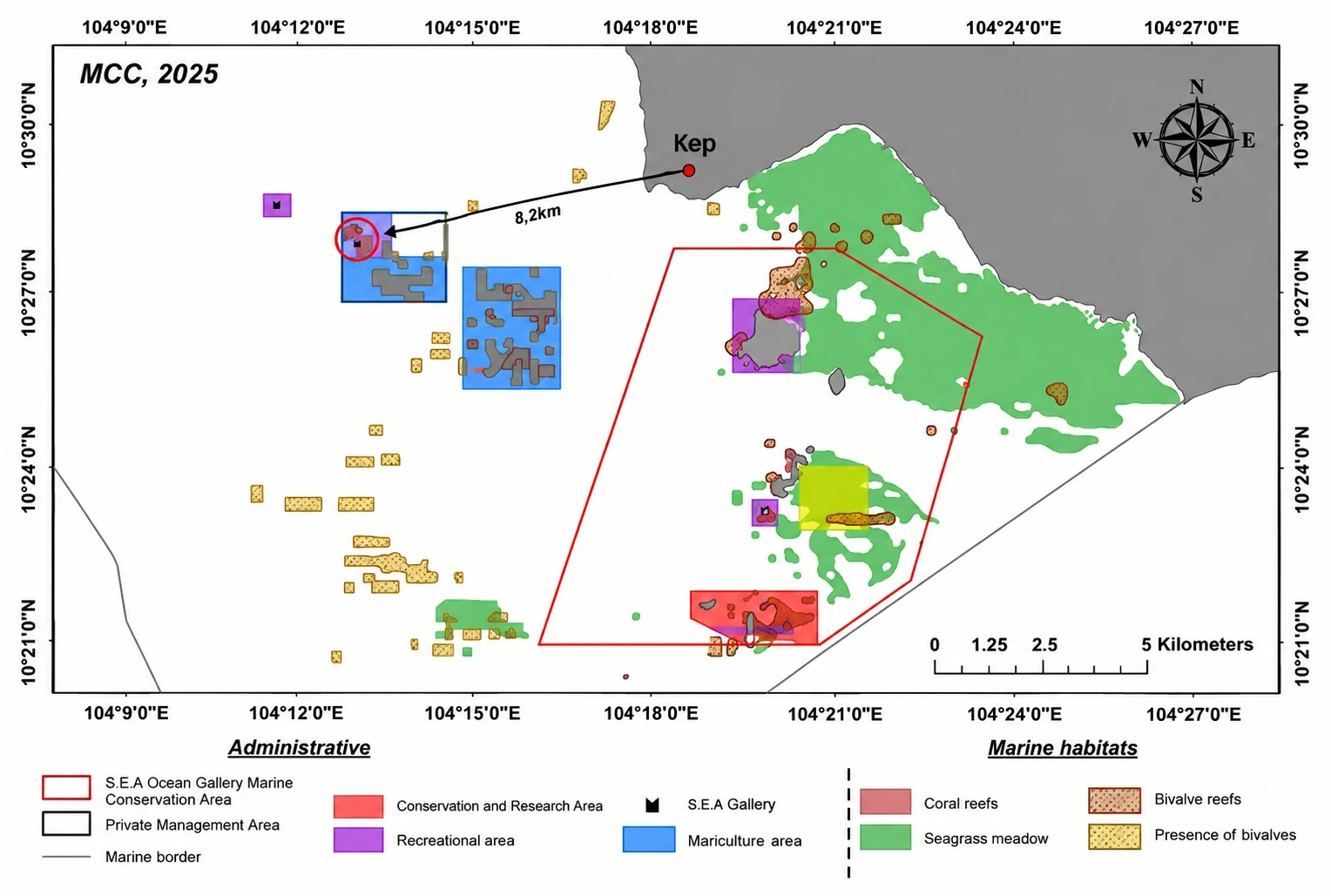
A proposed 828-hectare marine conservation area, with a five-hectare zone where commissioned works are built as habitat. Approved in principle by Government; the legal framework is being prepared.
Status, first
In September 2026 a concept note was submitted to the National Committee for Coastal Management and Development proposing an 828-hectare marine conservation area in the Kep coastal zone, including a five-hectare zone for the S.E.A. Ocean Gallery. The project has approval in principle. We have asked Government for guidance on the legal pathway, and the technical studies the authorities require are being funded.
Nothing will be built, installed or opened to visitors before technical review, environmental and social assessment, navigation and safety review, fisheries and community consultation, and Government approval. The final boundary, zoning, permitted uses and management framework are for the Royal Government of Cambodia to determine, not for us.
We publish this because a project of this length should be judged on how carefully it proceeds, not on how confidently it is announced.
The split
Art for Kep Organisation is an independent Cambodian non-profit. We run the cultural, artistic and community programme on the Kep coast, including our art for the sea.
Our founding partners, Knai Bang Chatt and Kep West, support us in kind with accommodation, studios, venues and grounds. Knai Bang Chatt Cambodia Co., Ltd. is the applicant and proposed operating partner for the gallery zone and marine conservation area, where Art for Kep leads the cultural programme.
Our President also founded both companies. We manage this openly. In-kind support is valued and reported separately in our annual accounts, and all related-party transactions are published every year and approved by directors with no interest in them.
Artworks commissioned by Art for Kep belong to the artist or to Art for Kep, never to a company. Works for commercial use are commissioned and paid for by the partner company directly. Donations fund artists, education, community programmes and the archive, and never infrastructure owned by a related company.
Zoning
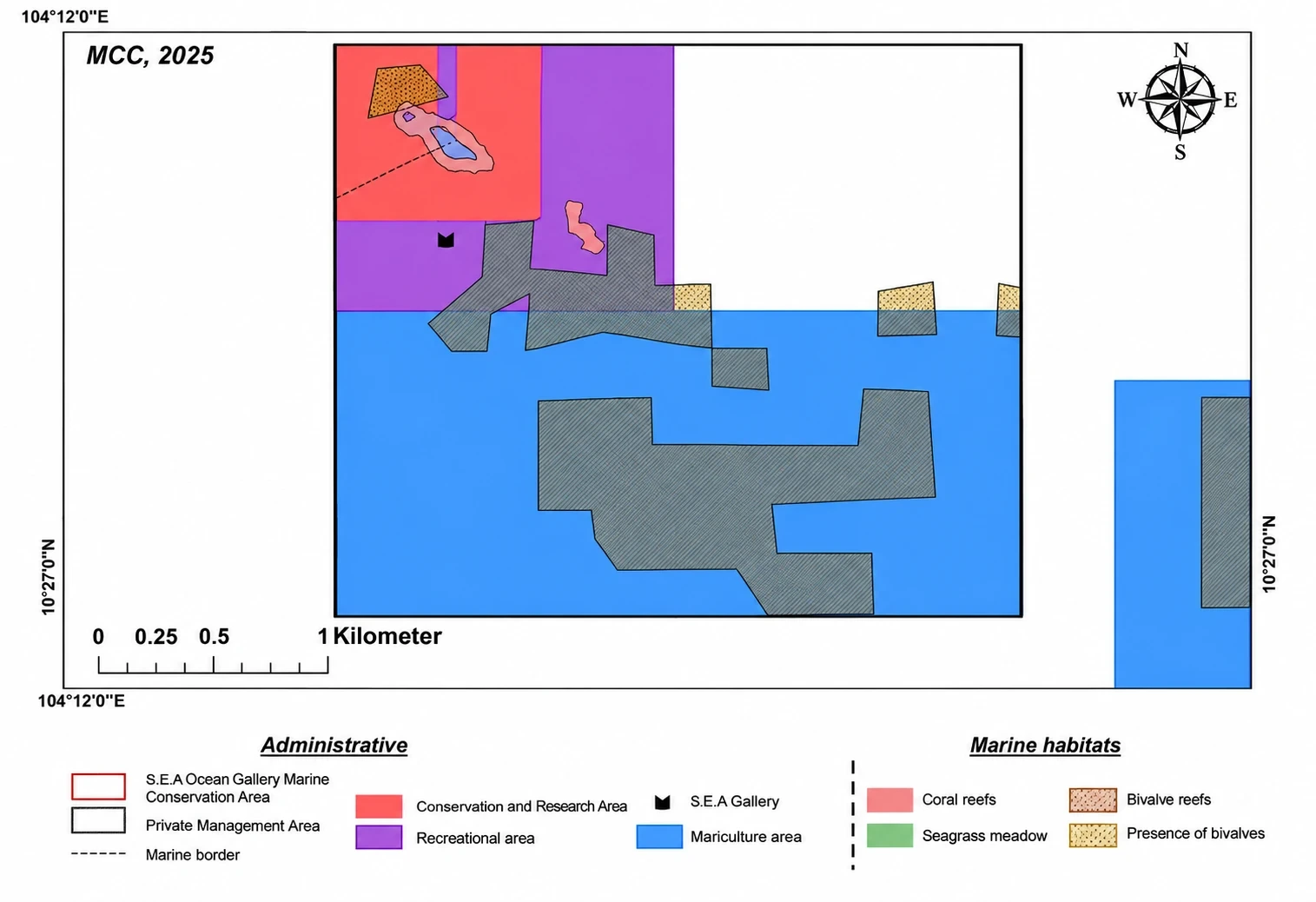
Bivalve cultivation, habitat recovery, and sustainable marine livelihoods for Kep’s fishing families. The largest zone in the plan.
Conservation, research, education and regulated low-impact use.
Controlled snorkelling, diving and marine observation.
Habitat protection, ecological recovery, scientific monitoring.
Reef restoration, underwater works, monitoring, education and managed visitor access.
The Gallery is the smallest zone. That is deliberate. It exists to give the other 823 hectares a public face.
The reef
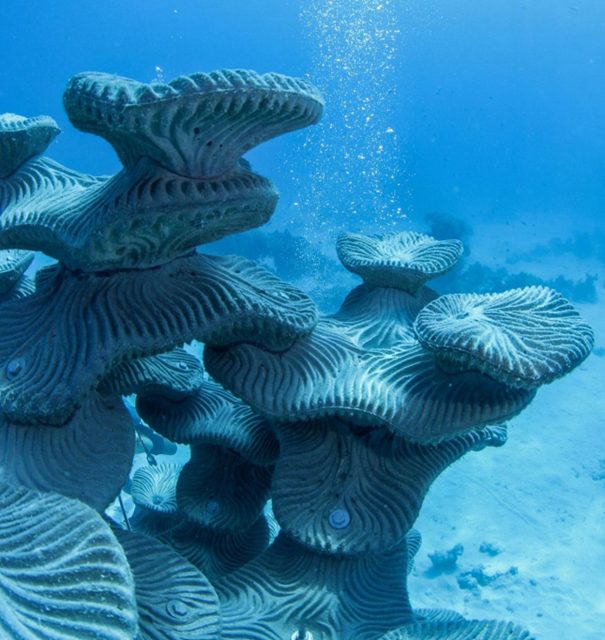
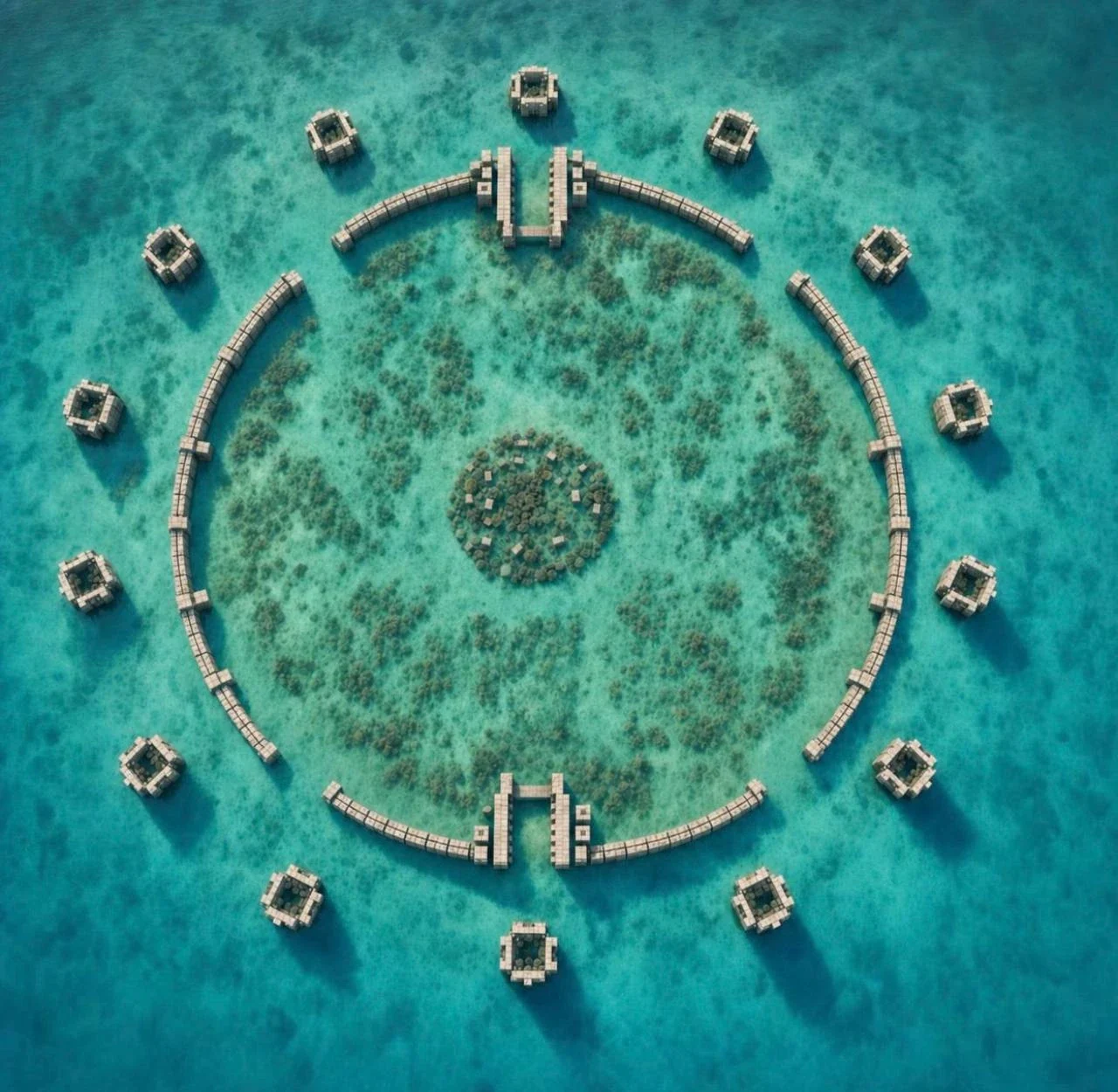
Within the five-hectare zone, a circular or linear reef structure of up to about one kilometre is proposed, using marine-compatible modular reef blocks such as the MOSES system from ReefSystems, or an equivalent solution approved by Government. Interlocking units with textured surfaces and internal cavities: shellfish and algae colonise the outside, fish shelter and breed inside.
The structure is substrate first and setting second. Final design, materials, dimensions, placement and installation method are subject to environmental assessment, hydrodynamic and navigation studies, and approval.
Already in the water
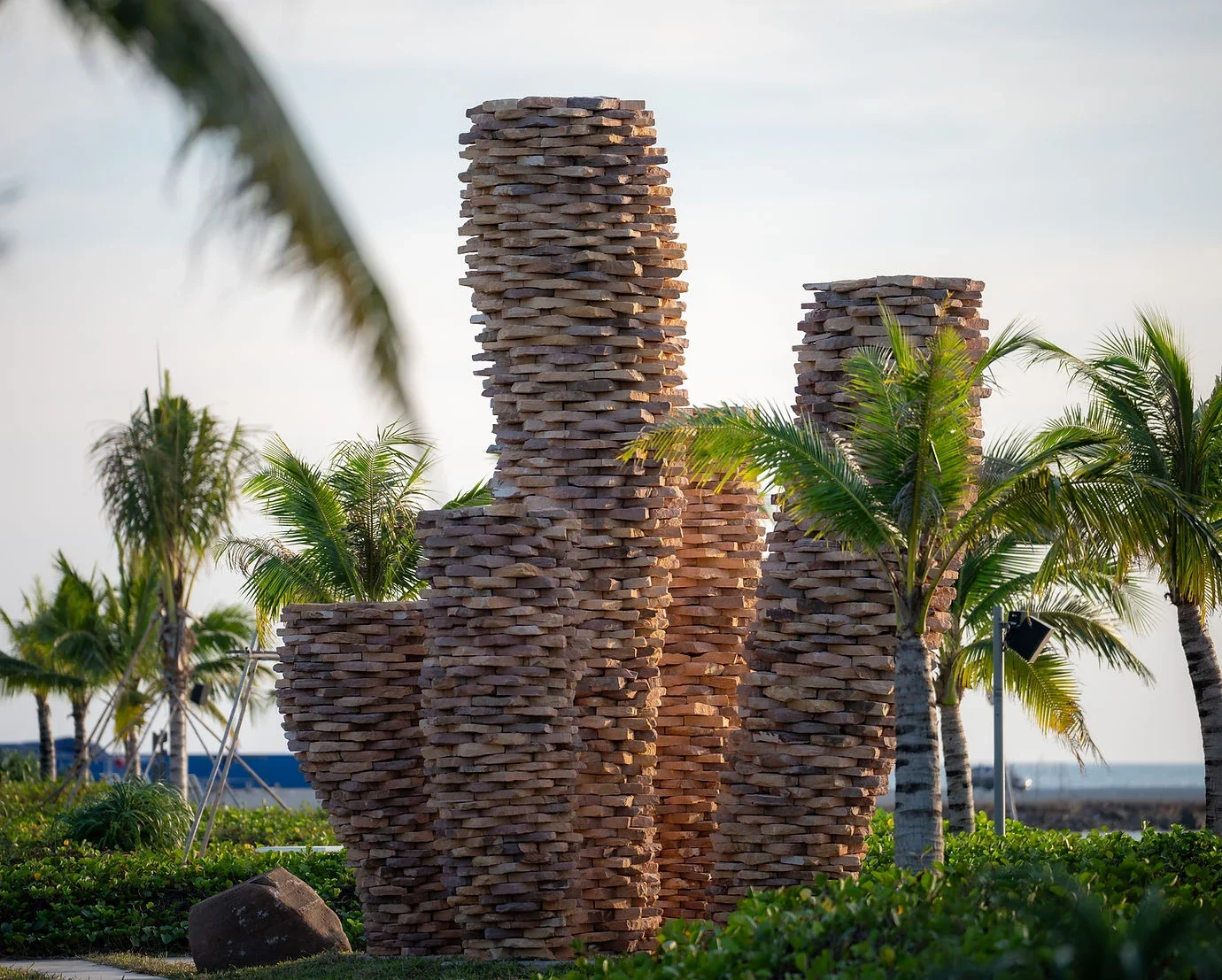
Coral Kingdom stands 5.7 metres in sandstone, 2,240 bricks laid by hand, by Sothea Thang with architecture and engineering by Bloom Architects. Begun 2022, designed 2023, installed December 2024, paid for by USD 100,000 raised through public and private subscription.
Plankton followed in November 2025: a 6-metre hanging sculpture by Thang Sothea from 108 recycled fuel containers and 1,765 pieces, two and a half months and a team of six.
And there is now a fleet: 21 retired fishing hulls from the communities of Kep, worked by 21 artists. Some will be scanned in three dimensions and returned to the sea as reef. That is the first collection this gallery will hold, and it exists whether the gallery is built or not.
Artists
Art for Kep commissions Cambodian and international artists to work side by side, learning from each other and making work together in Kep. Commissions are selected by an international art commission and our curators, every artist receives a fair fee, and we publish the number of commissions each year.
Every commission starts with the artist’s own concept, sketches and materials. If AI tools are used, they come later, for refinement and visualisation, and always under the artist’s control. These works are catalogued as human-authored and AI-assisted, with the tools recorded.
Schools
The plan projects school participation rising from about 100 students in year one to 500 a year by year three and 2,000 a year by year ten: guided marine visits, workshops, conservation education, and talks by artists and scientists, delivered in Khmer. Onshore exhibitions, residencies and education continue when weather or water conditions prevent underwater visits, so the programme does not stop for the monsoon.
Phases
In-principle consideration by the National Committee, confirmation of the institutional pathway, and continuity with the earlier Koh Karang marine preservation concept prepared in 2025 with Marine Conservation Cambodia and in consultation with the Fisheries Administration.
Boundary and legal clarification, referral to competent authorities.
Site validation, environmental and technical review, detailed zoning, stakeholder consultation.
Pilot delivery of the first phase, visitor management and safety, local training.
Scale-up across the gallery, recreation, conservation, research, education and mariculture demonstration.
Safeguards
Site validation. Marine biodiversity and habitat assessment. Environmental and social review. Hydrodynamic, sediment and water-quality assessment. Navigation and vessel-safety review. Engineering and materials assessment. Fisheries and community consultation. Maintenance, emergency-response, waste-management and, where required, removal and decommissioning plans.
Siting avoids sensitive habitats. Visitor access is managed through approved routes, guided activities, carrying-capacity limits, moorings, safety procedures and monitoring, with field implementation supported by Marine Conservation Cambodia.
Partners sought
Art for Kep is looking for partners who want to help build something lasting on this coast.
We’d welcome an architecture or design foundation to advise on the masterplan, and a museum or international art institution to co-curate our commissions and take the work to audiences beyond Cambodia. A university marine science department could join Marine Conservation Cambodia in monitoring and research. We’re also looking for foundations and cultural organisations to strengthen our governance and to sit on our international art commission.
If your organisation shares this vision, we’d like to hear from you.
Precedents
Authorship is the difference: artist-led, curated with Cambodian scholars, anchored in one coast and the people who fish it rather than in dive tourism.